
Telecom companies have been desperately waiting for a bailout package from the government after a Supreme Court order put their statutory liabilities at Rs 1.47 lakh crore.

The chemicals sector's recovery could be delayed until FY25 if the current trends of weak demand and flat pricing continue. Following a subdued September quarter, the revenue and profit performance of listed chemicals companies are anticipated to fall short of initial expectations of an improvement. Despite some price stability, the demand trajectory remains uncertain.
The BJP has incorporated caste as a significant component of its politics.

'For the common man, the economic conditions are not going to get better.'

Addressing a meeting of the Congress Working Committee, Gandhi said it should worry every Indian and her party will have to work hard to repair this damage.

The Congress on Tuesday termed as rhetoric and hollow on specifics the prime minister's address to the nation, saying there was no mention of a financial package or concrete steps to revive the economy.

Almost 80 per cent of all income losses during the first wave of the pandemic in 2020 were incurred by the private sector in India, while in many other countries the entire loss was on respective governments, a report said on Wednesday. While the Centre had announced a Rs 21 lakh crore COVID-19 relief package, comprising 10 per cent of the GDP, the actual financial support was only about 2 per cent of GDP, as the rest was all credit-driven. "Almost four-fifths of all income losses during the pandemic in 2020 were incurred by the private sector in the country, while the government sector bore only about a fifth of the losses.

As for structural reform, there are signs if one looks hard enough.
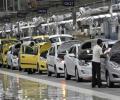
The government on Friday announced several relief measures including deferring one-time registration fee, lifting the ban on purchase of petrol/diesel vehicles by its departments and allowing higher depreciation, but it remained non-committal on the demand for a reduction in GST rates.

What happens if China depreciates its currency. In that case, Chinese products will be cheaper and people will continue to buy their products: Abhijit Banerjee.

Finance Minister Ishaq Dar, who presented the budget in the National Assembly, the lower house of parliament, said the government will target a growth rate of 3.5 per cent in the coming fiscal year.

The government is drawing up a relief package for industry with steps such as relaxation of asset-classification norms by banks, thus allowing companies to delay the repayment of loans, and tax holidays for the worst-hit sectors like aviation and hospitality. But it might not be enough to stop more bankruptcies from getting filed.
Prof Ananth Narayan, well known financial expert who works as a faculty member at the SP Jain Institute of Management and Research and the RBI's nominee director on the board of Yes Bank, expects a double-digit contraction in India's GDP this fiscal year. In the first of a two-part interview to Shobha Warrier/Rediff.com, Prof Narayan, below, says, "Giving liquidity and loan to cover the cash flow problem is not sufficient because you are essentially increasing the debt of many of these companies. And they might not be able to bear the burden."
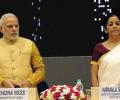
Prime Minister Narendra Modi on Thursday reviewed the impact of Covid-19 on the Indian economy and a possible second stimulus to boost sectors hit hard by the pandemic. Modi held discussions with Finance Minister Nirmala Sitharaman as the pandemic hit sectors from small industries to the aviation sector hard with millions of jobs at stake.
.jpg)
President Pranab Mukherjee has sought to counter criticism against the economic stimulus provided when he was the Finance Minister in 2009 and maintained that economy under him registered high growth rates.

'Neither farmers nor farm labourers will benefit from these jumla announcements of the finance minister'

With just a few days left for the suspension on fresh corporate insolvency cases to end, government sources have indicated that another extension is unlikely. An extension may not be economically desirable as it hampers the restructuring prospects for stressed companies, according to senior officials. Also, it would be a challenge to amend the law in such a short time. A Bill would have to be passed in both Houses of Parliament, if any change, with respect to suspension of Insolvency and Bankruptcy Code (IBC), is to be made - including extension or creating any exceptions to the rule.

As the second wave of the pandemic ebbs and the daily caseload falls, the struggles of the urban poor have come into focus. Many have suffered income and job losses after two successive waves. The second wave, in particular, has seen the poor being hit hard on account of lack of medical and financial help. For the fast-moving consumer goods (FMCG) companies this has meant that an important segment is under severe distress.

India's fuel demand in May slumped to its lowest in nine months as restrictions to curb the second wave of COVID infections stalled mobility and muted economic activity. Fuel demand fell 1.5 per cent to 15.1 million tonnes despite the low base of May 2020 and was down 11.3 per cent when compared to the previous month, according to data from the Petroleum Planning and Analysis Cell (PPAC) of the oil ministry. India was under one of the world's strictest lockdowns in May last year, which brought all mobility and economic activity to a grinding halt.

The Federation of Hotels and Restaurants Association of India has made a presentation to the government, requesting certain tax exemptions.
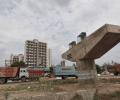
If 4,000 workers could work round the clock for the construction of the new Parliament building, then there is no reason why all infrastructure projects too cannot follow that model, asserts Dr Sudhir Bisht.

Waves of foreign portfolio investments worth over Rs 51,000 crore splashed into the Indian market in 2021 as overseas investors turned net buyers of domestic securities for the third straight year while excess global liquidity and other factors steered the ebb and flow of their investing ways. With the global financial system still flush with liquidity, emerging market assets, especially equities, might well remain the preferred investment avenue for many more months to come, experts opined. As the equities sizzled during most of 2021, that also saw economy slowly coming back into the recovery path, Foreign Portfolio Investors (FPIs) turned net buyers but their investment is much less compared to net inflows of Rs 1.03 lakh crore in 2020.

Given the many policy areas where the Centre and the states have not been seeing eye to eye in the last few years, it is time the Modi government convenes a meeting of the Inter-State Council, recommends A K Bhattacharya.
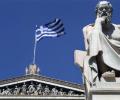
An International Monetary Fund study published on Tuesday showed that Greece needs far more debt relief than European governments have been willing to contemplate so far, as fractious parties in Athens prepared to vote on a sweeping austerity package demanded by their lenders.

The US actions can be seen as a riposte to India's neutral position on the Ukraine crisis, its continuing import of Russian arms and oil thus undermining Western sanctions, argues Colonel Anil A Athale (retd).

In her fourth tranche of the economic package, she said commercial mining will be done on revenue sharing mechanism instead of the regime of fixed rupee/tonne.

Since March 31, 2022, the PSBs' market cap has risen 43.7 per cent, from Rs. 7.29 trillion to Rs. 10.47 trillion. It's time for the government, the majority owner of public sector banks, to reap the benefit of the rally in bank stocks, recommends Tamal Bandyopadhyay.

Even as the industrial cycle has ground to a halt during the 21-day lockdown, the industry has been hit hard by foreign orders from major clients in the US and Europe being cancelled. Also, a sudden lack of labour has crippled the sector because of a mass exodus of workers from industrial units to the hinterland.

The Jammu and Kashmir administration has transferred five Kashmiri Pandit employees from Kashmir to Jammu, a step welcomed by the community members who have been on a strike for over two months in support of the demand for their relocation over safety concerns.
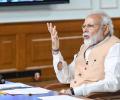
Addressing his council of ministers in a video conference, Modi asked them to prepare business continuity plans to fight the economic impact of COVID-19 on a war footing, but also asserted that this crisis is an opportunity to boost the 'Make-in-India' initiative and reduce dependence on other countries.

Chief Minister Sukhvinder Singh Sukhu said efforts are on to rescue the 300 stranded people, and they could be airlifted as the weather clears. Power and water supply has been snapped in several areas.

7 key areas that the Budget must address to re-energise the infrastructure sector, suggests Vinayak Chatterjee.

While the meetings on Friday were preliminary discussions, it is learnt that sectors like tourism; hospitality; aviation; micro, small and medium enterprises (MSMEs); and livestock have sought deferring loan repayments and temporary tax holidays in specific cases to help them tide over the steep fall in economic activity.

Finance Minister Nirmala Sitharaman on Wednesday announced Rs 3 lakh crore collateral free automatic loan for businesses, including MSMEs, to benefit 45 lakh small businesses. Detailing parts of the Rs 20 lakh crore economic stimulus package, she said this loan will have a 4-year tenure and will have 12-month moratorium, she said.

He alleged that the people of Madhya Pradesh were 'befooled' by the saffron party as there was no council of ministers or a health or home minister in place in the state amid the crisis due to the coronavirus outbreak.

Welcoming the latest round of stimulus announced by Finance Minister Nirmala Sitharaman on Thursday, experts said the measures will support the economic recovery boosting demand, job creation and by providing funds to the MSME and stressed sectors. The fiscal impact of the stimulus is likely to be around 0.25-0.6 per cent of GDP in the current fiscal, they said.

The finance minister has stayed true to her commitment to fiscal consolidation, even though the pace of the decline in the deficit could have been faster, notes A K Bhattacharya.

Months after the devastating flood ruined their life, the people of Poonch are today totally isolated. They feel they have been left unheard, once again.

The global COVID-19 situation, rollout of vaccines, geopolitical trends, Union Budget and economic recovery would be the major factors driving investor sentiments in 2021 after a tumultuous year which saw both 'the worst of times and the best of times' for the stock market, said analysts. What a year 2020 turned out to be! From witnessing gigantic losses to record-shattering gains, investors went on a roller-coaster ride amid the coronavirus pandemic and massive stimulus measures. Markets closed 2020 with remarkable gains of around 16 per cent, but will the winning ways continue in 2021 as well?
Most of the economic activity in the country had come to a standstill after the government imposed a 21-day nationwide lockdown beginning March 25 to check the spread of coronavirus.
